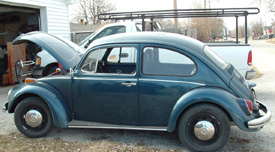
This VW bug is a 1970 model and we will name it Silver Lightning Bug.
Silver Lightning Bug will be green with silver lightning bolts on the hood and sides .
I will be showing the parts that will be going into the car.
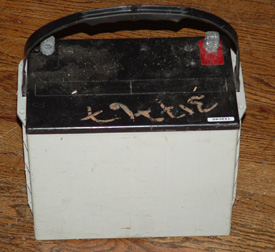
We will be using lead acid batteries for our alternative energy.
I will be using 48 to 120 volts DC for this car.
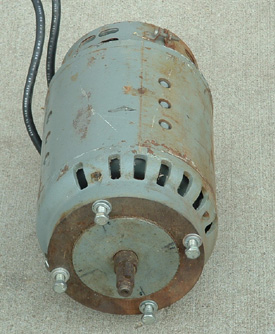
Our electric motor can run at 48v to 120vdc.
Electric motors will put out more power with a higher voltage.
The voltage limit for our motor is 120vdc with a output well over 40hp.
.
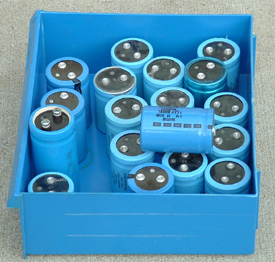
Supercapacitors have the ability to store energy from the batteries.
I am using electrolytic capacitors to buffer the batteries.
The supercapacitors can help with the high current that the dc motor needs at motor startup. .
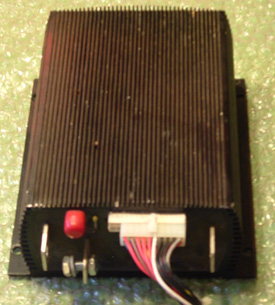
A motor controller will control how slow or how fast the motor will go.
Most motor controllers that are used for cars have a output of 400 amps and a voltage at 72 or more volts dc.
Some high end motor controllers are AC, but are very expensive.
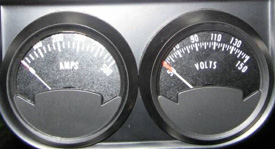
Meters are used to check the condition of the car systems and batteries.
Meters come in two types which are analog and digital .
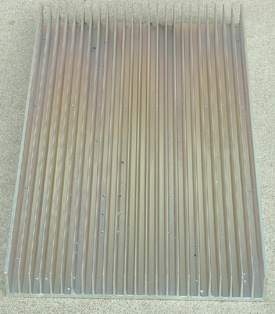
In our car we will use a large heat sink to keep heat away from the electronics.
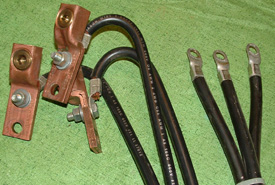
I think copper is the best wire for our electric car.
Copper has one of the lowest electrical power loss for the money.
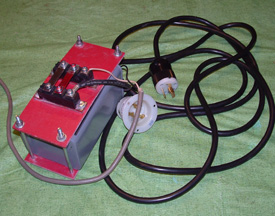
We are using a capacitive battery charger for our electric car.
I will not go into detail on this type of charger it is dangerous to use if you are not knowledgable on its use.
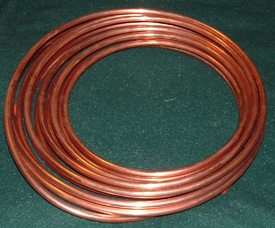
We will be water cooling our electric motor.
I will be using copper tubing and a 50% solution of water and propylene glycol.
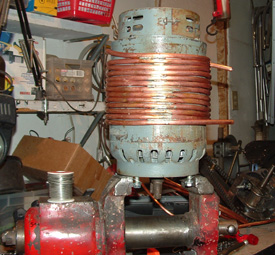
This is our electric motor with the copper tubing on it.
I Will be using a 12v pump and radiator on this cooling system.
I also will be using a temperature activated spst switch.
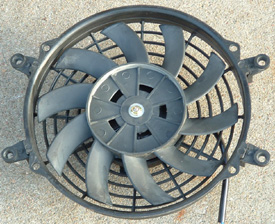
We will be using a active cooling system on the car.
Keeping the motor cool will increase the life of the motor windings.
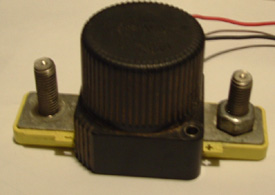
A contactor is a large relay that is like a on / off switch for the car.
Your contactor must match the size of your motor.
I like to use two times the current of the motor.
Example: If my motor rating is 100 amps I would use a 200 amp and up contactor.
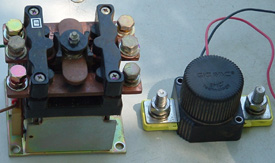
A contactor can be heavy duty, light duty, low quality, or high quality.
Try to get the best contactor you can for your car.
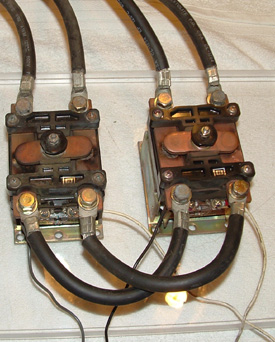
We are using two contactors in parallel.
Each contactor can have a LED to show that it is working.
Our logic is if one contactor short out we can disconect the shorted contactor and still run the car.
We are also able to run the car if one of the contactors have an open circuit, the other contactor will take the load and run the car.
One other benefit of using two contactors is each contactor is taking part of current load and will last longer.
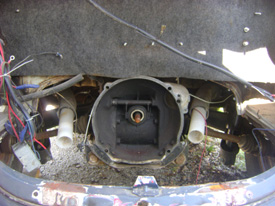
The old gas motor is out and Silver Lightning Bug is getting an electric motor .
We will be installing a modified water cooled Series Wound Motor.
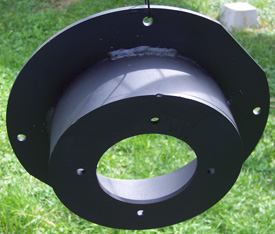
This is our electric motor adapter for connecting the electric motor to the drive system.
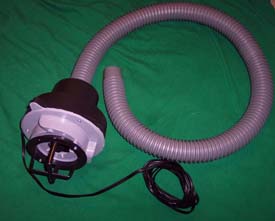
This is our air cooling unit made from a 12v wet/dry vacuum for air cooling the electric car motor.
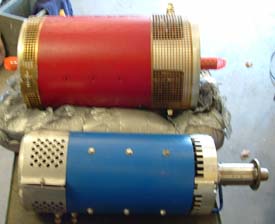
I am getting a ES-31C electric motor as you can see it looks small next to a Warp9 but the price was in my range.
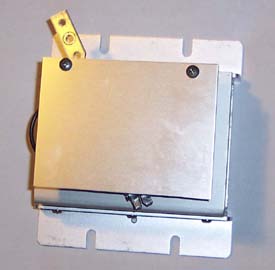
I am using a homemade throttle control unit with a 25k liner pot that is medical grade in quality.
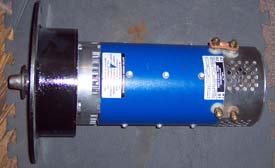
Our motor and adapter ready to be installed in our car.
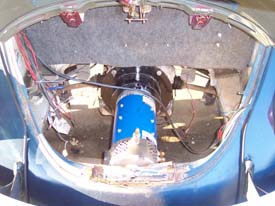
Electric motor installed in our car.
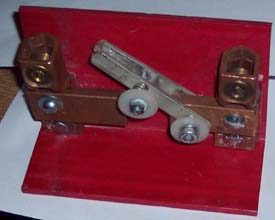
If I need to cut main power to the car in an emergency, I build a disconnect switch .
My disconnect switch can take well over 500 amps of current at over 144v.
I will mount a big button on the driver's side of the car that connects to the switch with a cable.
Pulling the button will disconnect the high voltaage battery power on car
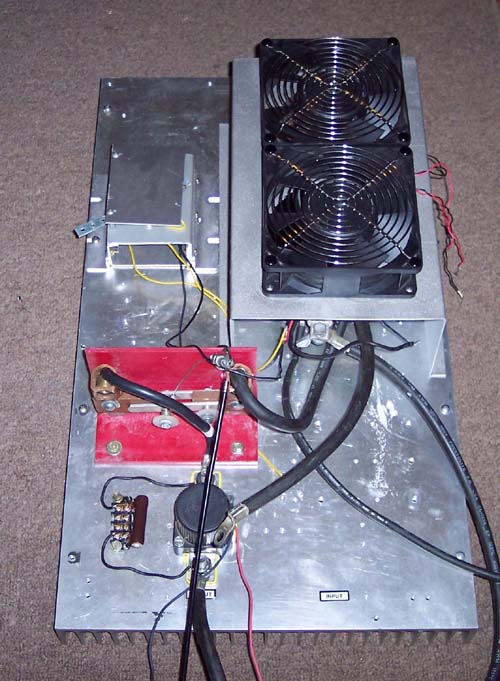
Homemade electric car control system.